Best tracks: The Path, Solar Power, California, Fallen Fruit, Mood Ring
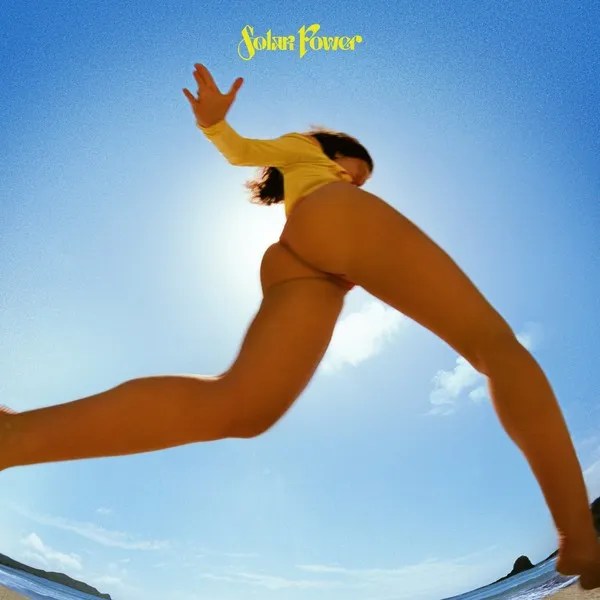
I’ve gone back and forth on how to handle album reviews here, in some ways waiting for an album with a narrative that is so interesting that I just have to write about it. Lorde’s Solar Power happens to be that album. The divided reception is certainly one reason I really want to try and make sense of what Lorde has released here.
I’m old enough that Solar Power is not the first case I’ve seen of a mainstream pop artist rejecting what made them popular and coming out with something that is, in some ways, in direct opposition to their previous work. Lorde’s sophomore record, Melodrama, was one of the best pop records of the last decade, that much is true. It is a record that takes the negativity of a breakup and turns it into something beautiful: a portrait of catharsis and bliss in defiance of emotional turmoil and anxiety.
Kanye West’s long-delayed new record, Donda, is finally out, and it’s a bit of a mess. At 27 tracks and 108 minutes, this thing is exhausting. It’s clear that a lot of work was put into creating these tracks, but not enough into arranging or curating them into a compelling playlist. That said, this is still Kanye West we’re talking about, so there are still many wonderful songs to be found on Donda. The one that has really stuck with me is “Jesus Lord,” the beating heart of the entire album.
In Jesus Is King, Kanye used Christianity as yet another tool to talk about how awesome Kanye is. In “Jesus Lord,” however, Kanye displays an emotional understanding and sense of empathy that I didn’t know he still had in him. He begins the song by talking about his own experience with depression and substance abuse, using clever wordplay without going too over the top and ruining the emotional moment–“Lately, I’ve been swimming on the deepest end. It’s just drugs, it ain’t no hugs, it ain’t no love there. You’ve been down so much you don’t even know what’s upstairs.“
In one of the most earnest moments in Kanye’s entire career as a vocalist, he describes his mother’s death as a moment that “Took the life out of the party.” The pain in his voice is palpable, and it just goes to show that the death of a loved one is a pain you carry with you always. He daydreams of both asking Christ to bring her back to life, or dying and seeing her in the afterlife. Either outcome is good enough for him. It’s incredible imagery.
Jay Electronica also kills it on his verse, despite a questionable Rothschild family name drop (Are we really going to go there? Let’s not ruin such a tender song with casual anti-semitism). The song ends with an extended outtro featuring a voice recording from Larry Hoover Jr, thanking Kanye for personally requesting the White House for the commutation of his father’s prison sentence. Think what you will about Larry Hoover, it’s a heartfelt and gut-wrenching speech about the pain caused to his family by America’s racially biased culture of mass incarceration. It’s an amazing moment.
I may have mixed opinions on Donda as a whole, but it’s tracks like “Jesus Lord” that make this feel like a record that deserves its spot in the Kanye West discography. I’ll keep putting up with chaotic album releases as long as the music is this great.
This week, I wanted to highlight the newest single from classic indie group Low. “More” is a track that is simultaneously insane and simplistic. The song is pretty short, and has a simple arrangement of vocals with an overwhelmingly noisy accompaniment of what sounds like a guitar distorted beyond recognition.
The first thing that jumps out at me about this song is its texture. While the sound of the instrumental is abrasive, even bordering on noise, it is also intricate and perfectly mixed. Its sound is so tactile that it almost feels like a massage for my ears. This is definitely a “love it or hate it” type of sound, but I’ve always really appreciated artists who are capable of taming and molding noise into gorgeous sculptures of sound, and “More” definitely fits into this category.
There isn’t much to the lyrics, but there is a lot of meaning if you read between the lines. In the first verse, the protagonist is expressing a sense of loss–“I gave more than what I should have lost. I paid more than what it should have cost.” This is something elaborated on in the second verse, where they augment the idea with a sense of being cheated, and finally, regret–“I should have asked for more than what I got.“
I’ve never been into Low very much, but these new singles have piqued my interest for their upcoming record, Hey What, which comes out next month.
This week we have yet another new track from Sufjan Stevens’s upcoming collaborative record with Angelo De Augustine, A Beginner’s Mind. “Back to Oz” follow’s last month’s spectacular “Reach Out,” and it gives us a bit of a different flavor to enjoy in anticipation of this new record. While “Reach Out” leaned closely to Sufjan’s folk roots, “Back to Oz” is a groovy and sexy indie rock jam session inspired by the 1985 film Return to Oz.
Of course, it still contains all the elements of a fantastic Sufjan Stevens track. The song is filled with waves of elegant palm muted guitar, whispery falsetto and heartbreaking lyrical imagery. The lyrics are more impressionistic than the direct “Reach Out,” using words like brush strokes to create an emotional image (“I’ll be there to play my part, want to keep us safe from harm. But a love was in my heart that I feel now.“)
Like with “Reach Out,” this feels like a return to Sufjan’s work in his Michigan and Illinois albums, and he sounds like he hasn’t lost a beat in the intervening decade. That’s not to minimize De Augustine’s contributions here. While I’m not as familiar with his work, it seems he was central to the songwriting process for these songs, and I’m glad to see that his presence seems to have resulted in a batch of tracks that are matching–if not exceeding–Sufjan’s best work.
To say I’m excited for this record is an understatement. All the tracks that have released so far have been indicating this might be one of the best indie folk records of the year. It’s going to be an excruciating wait for September 24th, that’s for sure.
Guided By Voices can be an infuriating band to follow. Because of the prolific nature of their output, the quality of their releases can often vary dramatically. That said, 2021 seems to be a good year for them. Earlier this year, they released Earth Man Blues, an album where this iteration of the band sounded tighter and more lush than they’ve ever been. Now, they have announced their second album of the year, the wonderfully titled It’s Not Them. It Couldn’t Be Them. It Is Them!, and shared a new single, the sugary-sweet “My (Limited) Engagement“.
The song fits the template of a good Robert Pollard composition. It’s short and to-the-point, dominated by perfectly crunchy guitars and a punchy vocal melody. Its lyrics are a soup that you can read into at your own peril, like much of Robert Pollard’s work. It doesn’t have the psychedelic touches that made Earth Man Blues such an interesting album in their discography, but Robert Pollard still has the ability to channel pure bliss with his voice. It’s standard, but excellently executed indie rock.
While it’s been a long while since they’ve put out an entire record with the consistency of Bee Thousand or Under the Bushes Under the Stars, songs like this make them worth following, even as Robert Pollard’s troupe enters the fifth (!) decade of its existence. It’s best to keep expectations in check when talking about a Guided By Voices record–they are certainly not going to reinvent the wheel at this point in their career–but I can only hope that this song is a sign of good things to come for these indie rock granddaddies.
This week we have a new track from the um… not an underrated popstar, Alice Longyu Gao. I’m not typically one for hyperpop-adjacent music, but I did become a partial convert last year when I got addicted to Dorian Electra’s My Agenda. That record was a catchy and blood-pumping group of pop songs that eviscerate incel culture and have fun doing it. “Underrated Popstar” is very much in a similar musical vein, so it’s unsurprising that it was first featured at Dorian Electra’s My Agenda ONLINE stream event last year. Now, the song has finally hit streaming platforms, and it’s glorious.
Hot off the heels of a similarly hard-hitting collaboration with Alice Glass, “Underrated Popstar” is furiously sassy and endlessly catchy. Alice’s cartoonish self-aggrandizement is infectious on its own, mostly because Alice isn’t wrong about having an “Impressive sound like no one else.” At the same time, there is a lot of anxiety mixed in that pumps up the stress levels. Alice wants to “Be an icon” but makes a passing wish–“Don’t flop“–in the same breath.
In the song’s bridge, Alice ponders, “What do I do if I never pop off, fold tacky socks at the local Walmart?” Maybe it’s meant to be tongue-in-cheek, but the way the instrumental gets really aggressive afterwards makes it feel like a genuine bit of concern. What I can say is, there’s a heck of a lot of talent at play here, be it the superb vocal performance or the nightmarishly aggressive beat. For the world’s sake I hope Alice’s career does pop off as hard as this song does.
This week, my favorite track was from Coldplay. Yes, THAT Coldplay. Look, I’m not a hater–in the grand scheme of soft pop-rock groups, Coldplay is one of the least offensive. Despite being long removed from what I believe to be their heyday in the early and mid 2000s, their records still tend to have a handful of enjoyable songs. “Coloratura” is the first song of theirs in a long while that is not just good–it’s great.
It’s a bit easy to get overexcited when a group like this has an unexpected return to form, so let’s keep expectations in check. This song is not that innovative or groundbreaking. “Coloratura” is pure Pink Floyd worship, blending spacy progressive rock with Coldplay’s familiar brand of piano pop. If you didn’t like Coldplay before this, this is unlikely to make you a convert, but they do a pretty good job at what they were going for here, and it does feel like a breakthrough for the band.
The production on this song is as high quality as you would expect from a band with Coldplay’s profile. The song is full of lush orchestral touches, such as some gorgeous harp near the beginning, and plenty of strings later on in the song. I have no complaints to make as far as the way this song sounds. I’m mostly just glad we seem to finally be completely removed from their rather mediocre elecropop phase.
If I had to nitpick the songwriting, I’d say they could have done a better job of trimming the fat from the song. Some sections, like the rather long instrumental introduction, feel tacked on upon repeated listens despite sounding nice on their own. The lyrics are appropriate to the theme of the song, naming off celestial objects to conjure images of space travel (“And up there in the heavens, the explorers who’ve all gathered by balloon saw the world turn, through Voyager, Callisto, Calliope, Betelgeuse, the Neon Moons.“). It does its job, although I wouldn’t say the lyrics are particularly profound or memorable.
What’s so good about “Coloratura” then? To me, what makes this song stand out is the composition and arrangement. The chord progression feels meticulously thought out, with each change giving me a feeling of being led somewhere new. For a monster 10-minute song such as this, they do a great job of building up to its climax, and then winding things down in a way that feels very natural and satisfying.
Perhaps the best compliment that I can give to “Coloratura” is that it really doesn’t feel like it’s 10 minutes long. It’s so successful at putting me into the trance-like state of drift that it’s trying to convey that it just makes time melt away. I’m not sure what this means for their upcoming ninth album, since previous single, the 80s-inspired “Higher Power,” is a very different beast from “Coloratura.” I suppose we’ll see when it’s released in October.
“Everybody Sins” is the third single coming from Andrew W.K.’s upcoming sixth album, God Is Partying. While he has a reputation for being a fun rocker who makes blissful party anthems, these new singles have been displaying a darker, edgier Andrew W.K. that I’m quite looking forward to hearing.
“Everybody Sins” is pretty vanilla compared to the previous singles, being less theatrical than “Babalon” and less eerie than “I’m in Heaven,” but it makes up for it by being pretty damn catchy. Like with the previous songs, Andrew is singing about pseudo-religious clichés (“There’s a hole in the ground where the beasts will gather ’round. If you look, you will see that the beasts are you and me“) that sound like they came from a random metal lyrics generator. The vocals aren’t particularly impressive, but there is a great sense of atmosphere, and the production is still impeccable.
This is probably my least favorite of the new singles from Andrew’s forthcoming record, but this was still my favorite track from this rather slow singles week. “I’m in Heaven” was quite harrowing, containing almost none of the “fun” that typified Andrew in the past–and I loved it for that. “Everybody Sins” does feel a bit tongue-in-cheek by comparison, and I’m quite interested to see which of these two extremes the record leans towards.
Apologies for skipping the past week! I ended up having a lot of unexpected busyness around the Fourth of July holiday. Now that we’re on the other side of it, I’ll restart things with a great new track from legendary singer/songwriter Sufjan Stevens!
Stevens first gained recognition in the 2000s for his work on classic records such as Michigan and Illinois. In the past decade, Sufjan expanded his sound in all directions, stripping things down to the bare minimum in2015’s Carrie & Lowell, and more recently delving into icy electronica with last year’s The Ascension, as well as the group of ambient pieces that he released earlier this year.
Remaining ever prolific, Stevens has now teamed up with fellow folk songwriter Angelo De Augustine to deliver yet another new record titled A Beginner’s Mind. The lead single, “Reach Out,” feels like a warm hug, a deep revelation presented through curtains of gorgeous fingerpicked guitar and lush instrumentation. Basically, it’s a return to the production and songwriting style of Michigan and Illinois. Despite being separated from those records for over a decade, Stevens is somehow sounding better than ever.
Like Stevens’s best work, the song is nostalgic in nature, recounting memories of youth and naivety with a tenderness and beauty that no other contemporary folk artist can touch. Stevens contrasts himself with another person. Where he is perhaps too cautious and shy, this other person is reckless and lives freely “All my life I tried so hard to separate myself from all that is and was and will be torn apart. You were running unafraid. I know you, but I’ve changed my way.”
It seems there may have been some romantic feeling that died on the vine–“Home is where you have called my name…You said ‘Love may have lost its way’.” Ultimately, the song culminates into one universal message: reach out to the people who have come before you. Learn from their experiences and make their wisdom your own. As someone who has repeatedly sung about historical figures and relatives with an almost mystical admiration, “Reach Out” triumphantly sums up the essence of Sufjan Stevens’s entire career.
The newest record from Tyler, the Creator, Call Me If You Get Lost, took a few listens to grow on me. One song that intrigued me upon first listen, though, is “Wilshire,” an eight-minute epic that spotlight’s Tyler’s incredible ability as a storyteller. Tyler goes into painful detail about an illicit relationship with a friend’s lover, starting at the moment they meet, and ending with the emotional wreckage that ensues.
The song is based around a hypnotic chord progression that loops throughout its entire length, with very simple instrumentation comprised of a groovy drumbeat, bass and some synth keys. The instrumentation does not change throughout the song, except for a few moments where the bass drops to create some separation between the different verses.
I’ve read some complaints about the production on the track, which is fair. I do think the instrumentation could do with a little more variation, and mixing the drums so far to the right channel makes it a little abrasive to listen to with headphones. There’s also a subtle vinyl crackle effect that I honestly didn’t notice at first, but it personally doesn’t bother me. In my opinion, all of it is overshadowed by how impressive Tyler’s rapping is here.
First off, Tyler really sells it on the sensuality of the first few verses. His lyrics display the mental ping pong going on in his head–he constantly worries about the moral implications of his actions, but then gets overwhelmed by the power of plain old physical attraction. “It’s morals I really have, it’s lines I could never cross. But you got something that make all them good intentions get lost.“
This guilt follows Tyler throughout the affair. One thing Tyler emphasizes earlier on is that he doesn’t enjoy being a homewrecker, but his attraction to this person is just too powerful to deny. As it continues, the affair ends badly, and no one involved is happy–“We sat in the car and cried for an hour. My shirt look like a showerhead got it. We called it off, I’ll skip the details but that night I seen hell.“
The emotional vulnerability here stands in stark contrast to some of the rather boastful verses elsewhere in Call Me If You Get Lost, which makes “Wilshire” such an interesting moment in the tracklist. If we are to believe Tyler, there was real, mutual chemistry between him and this other person. Does chasing that make him a bad person? What responsibility does the other person share? Can you continue to be friends with that person after such a situation? This is just such an impressively nuanced take on the narrative of infidelity, which is why I think this track leaves such an impression despite its flaws.

 Amped!